
Nvidia CEO: AI Job Creation Booms, Crushes Fears
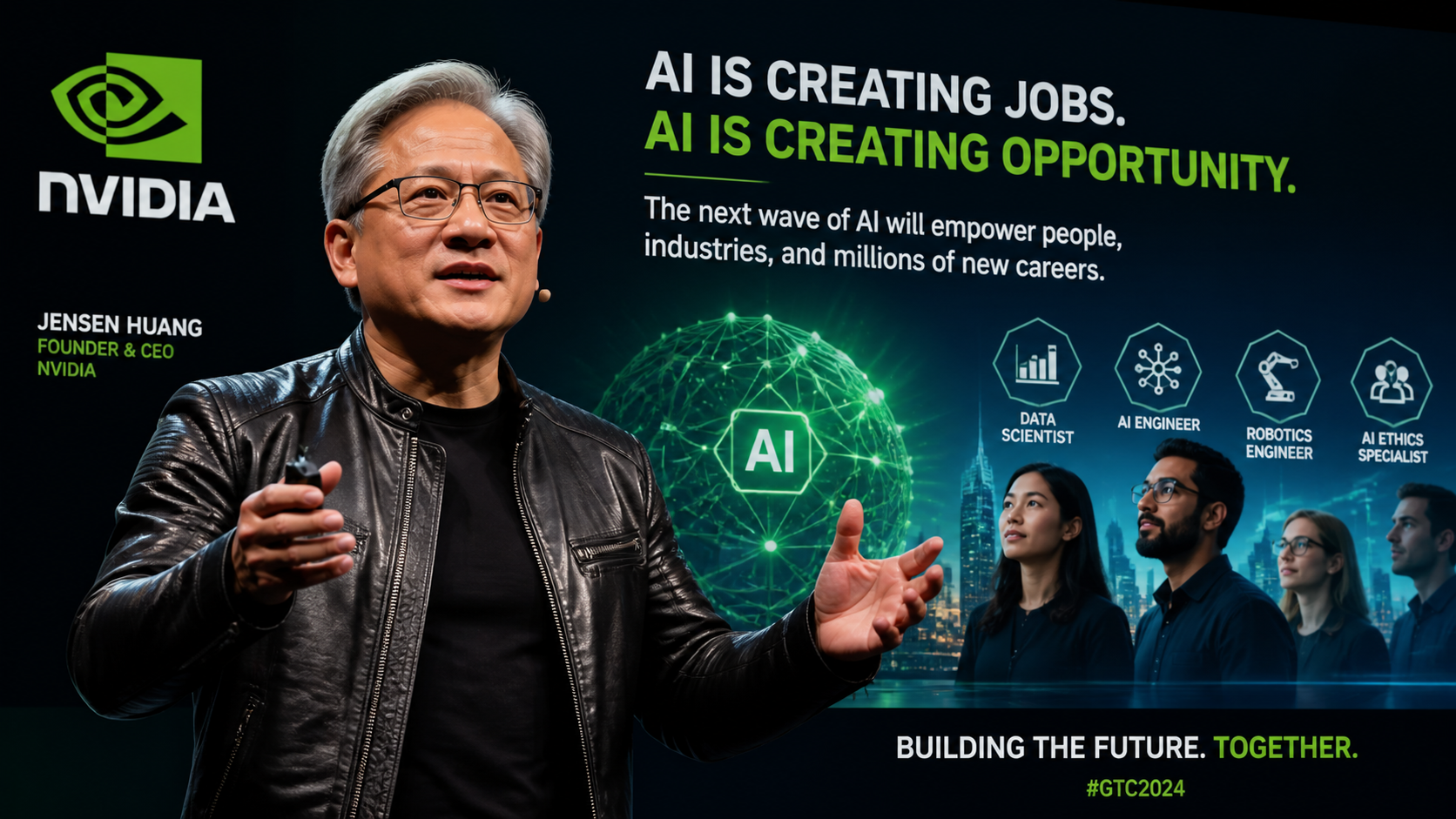
Jensen Huang, CEO of Nvidia, offers a stark counterpoint to widespread anxieties about AI-driven job losses by asserting that AI job creation is booming and quickly outpaces fears of widespread unemployment.
In a landscape where automation often evokes images of job destruction, Huang emphasizes a different narrative—that artificial intelligence is generating new categories of employment and revitalizing sectors. “AI is not merely replacing jobs; it is transforming tasks, creating new roles that did not exist before,” Huang explained in a recent interview. This perspective challenges the commonly held belief, explored in debates around the question, will AI create more jobs than it destroys, by highlighting the nuanced difference between automating tasks within jobs versus eliminating entire job functions.
Huang’s vision aligns with economic forecasts suggesting that AI could serve as a significant job engine if coupled with strategic upskilling and policy planning. AI jobs are not restricted to tech-centric roles but span across blue-collar to skilled trades, debunking the myth that AI only benefits highly educated workers. For instance, Nvidia invests heavily in AI-powered manufacturing lines, dubbed “AI factories,” contributing to US re-industrialization efforts and opening avenues for new job categories in automation oversight, AI ethics, and system maintenance. This reflects a broader industry trend where AI implants itself as a complement rather than a replacement for human labor.
The CEO emphasizes upskilling as critical to harnessing AI’s economic potential. “We must focus on teaching workers new skills to handle AI tools, not just fear them,” Huang noted. Such training initiatives aim to transition the workforce towards roles that leverage AI to amplify human productivity. Notably, this approach tackles the content gap in public discourse about how workers can remain relevant amid rapid technological shifts.
Huang’s optimism also counters doomsday scenarios popular among critics of automation. He notes that while AI might disrupt some employment sectors, it rewards adaptability and innovation, similar to past industrial revolutions. This viewpoint is supported by industry analysts who highlight AI’s role in creating demand for new professions in AI system design, maintenance, and regulation. Moreover, Huang warns against fear-mongering around AI, suggesting it could stifle investments and policy development crucial for AI-related job growth.
However, Huang acknowledges that the AI revolution requires careful balancing. Automation’s immediate effects might displace certain workers, underscoring the need for proactive economic strategies and safety nets. This balanced stance contrasts with both alarmist and excessively optimistic projections, pushing for pragmatic policies that foster an AI-inclusive labor market.
From a hardware perspective, Nvidia remains at the forefront of enabling AI’s potential. Its AI chips and computing infrastructure underpin the development of novel applications across sectors, from healthcare to finance. This backbone technology naturally stimulates demand for engineers, data scientists, and technical specialists, alongside new roles in AI ethics and governance. Readers interested in the technical enablers behind this AI-driven job surge might find related insights at Nvidia hardware and AI ecosystems.
Echoing Huang’s views, recent Milken Institute events have explored the economic impacts of AI, emphasizing job creation and workforce transformation rather than net job loss. Their discussions reinforce the idea that policy and business strategy must adapt to a changing employment landscape shaped substantially by AI innovation.
Economic data further substantiate Huang’s claims. A CNBC report highlighted increasing wages in blue-collar jobs linked to AI integration, dispelling fears that AI only depresses salaries or eliminates middle-skill jobs. Instead, these roles are evolving to incorporate AI-enhanced efficiency, boosting productivity and compensation simultaneously.
While skepticism remains, Huang’s stance invites a reevaluation of AI’s role in the workforce. Rather than viewing AI as an existential threat to employment, he posits it as a transformative force that requires human adaptation. The conversation now shifts from alarm to action, focusing on leveraging AI to create inclusive, sustainable economic growth.
This recalibration of expectations underscores the importance of strategic foresight, investment in human capital, and embracing AI as a tool for job creation. As industries continue to integrate AI—supported by robust hardware infrastructures and informed policy frameworks—the promise of expanding employment opportunities through AI job creation is increasingly realizable.