
Breaking: Dental Practice Software Security Bug Fixed
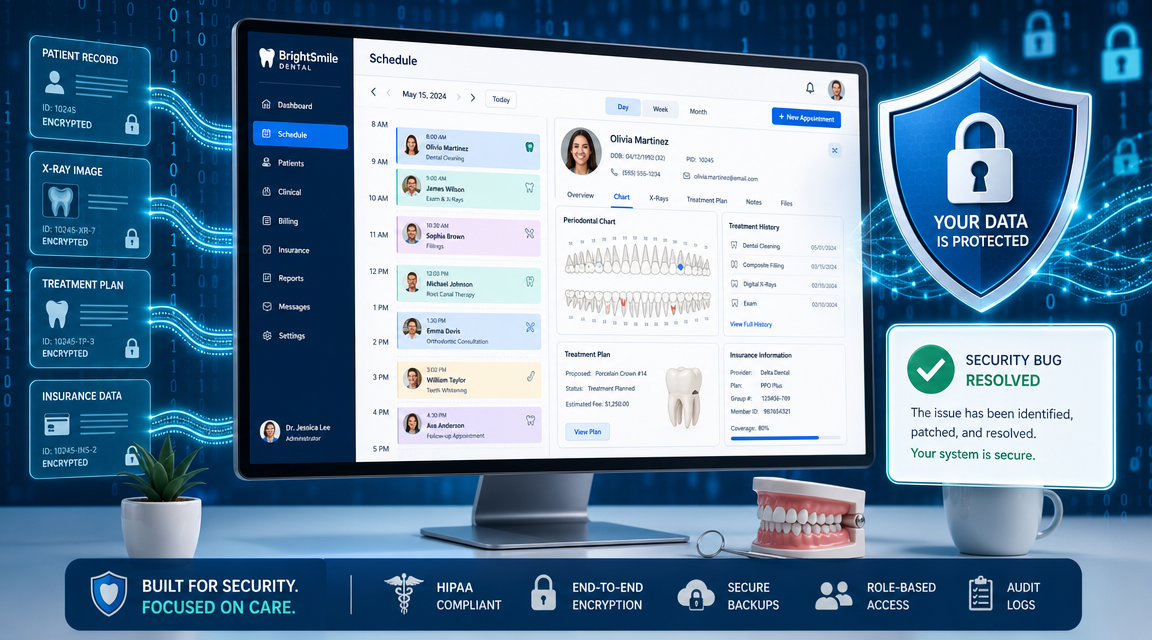
A recently identified dental practice software security bug has jeopardized the privacy of thousands of patients by exposing sensitive health records. The flaw, discovered earlier this month, allowed unauthorized access to patient data, highlighting significant vulnerabilities in dental healthcare technology.
The bug, embedded within widely used dental practice management software, affected crucial details including patient names, social security numbers, and treatment histories. Such patient data exposure elevates risks of identity theft and compliance violations, drawing attention to broader healthcare data breach concerns. The vulnerability was swiftly addressed by the software provider, whose prompt actions prevented further potential damage.
Understanding the technical details of this dental practice software security bug reveals its severity. The flaw allowed attackers to bypass authentication protocols, granting unrestricted database access. Security analysts assigned it a CVE identifier and noted a moderate to high CVSS score, signaling an urgent need for resolution. This incident shares similarities with other recent healthcare software vulnerabilities, such as the 38 flaws identified in OpenEMR medical software, which also pose considerable patient data risks.SecurityWeek’s report on these OpenEMR vulnerabilities contextualizes the widespread risks facing healthcare IT systems today.
Dental records vulnerability like this one underscores growing challenges in protecting sensitive health information amidst increasing reliance on digital infrastructures. Experts emphasize that beyond patching software bugs, dental practices must implement rigorous cybersecurity protocols. Measures include regular software updates, multi-factor authentication, data encryption, and staff cybersecurity training to mitigate threats effectively.
The exposure details from this incident reveal the extent of the compromised information. Patient names, social security numbers, dates of birth, insurance information, and detailed dental treatment histories were at risk, amplifying the impact of such a healthcare data breach. These categories of data are particularly sensitive under regulations like HIPAA, which mandates stringent protections for patient information.TechCrunch coverage highlights how this breach could affect dental patients’ privacy rights and financial safety.
The software vendor’s rapid response played a critical role in containing the situation. Once the vulnerability was uncovered, a targeted patch was developed and distributed promptly across affected installations. This swift patch rollout contrasts with slower industry responses in other healthcare breaches, earning recognition from cybersecurity experts. The vendor’s transparency and cooperation with regulatory authorities also helped maintain trust among users.
For dental practices, this event serves as a wakeup call to review their own cybersecurity postures. Clinics reliant on outdated or unpatched software are particularly vulnerable to similar exploits. Practitioners should verify they have installed the latest updates and maintain vigilant monitoring for suspicious activities. Consulting expert healthcare cybersecurity guides such as those detailing healthcare breach prevention strategies can offer additional safeguards.
This incident adds to the growing list of healthcare technology vulnerabilities exposed in recent years. Industry comparisons reveal that dental software systems have traditionally lagged behind other medical sectors in cybersecurity investment, creating an urgent need for innovation and commitment. Experts advocate for adopting advanced solutions that incorporate AI-driven threat detection and continuous vulnerability assessments.Dark Reading’s reporting on AI’s role in uncovering security flaws exemplifies the emerging frontier in securing patient data.
Dental patient data protection now faces increased scrutiny from regulators and customers alike. HIPAA implications from breaches like this enforce heavy penalties and demand corrective action plans from affected organizations. Clinics ignoring these threats risk not only legal consequences but also reputational damage that can undermine patient trust long-term.
In conclusion, the discovery and rapid fix of the dental practice software security bug illuminate critical vulnerabilities within dental healthcare IT. This incident highlights the necessity for dental offices to adopt comprehensive security measures and remain proactive with software maintenance. It further serves as a benchmark for software vendors to prioritize user data protection rigorously in their development pipelines. Ultimately, safeguarding patient records in dental practices is paramount amid evolving cyber threats in healthcare.