
AI Rally Powers Robinhood Venture Fund’s Second Retail IPO
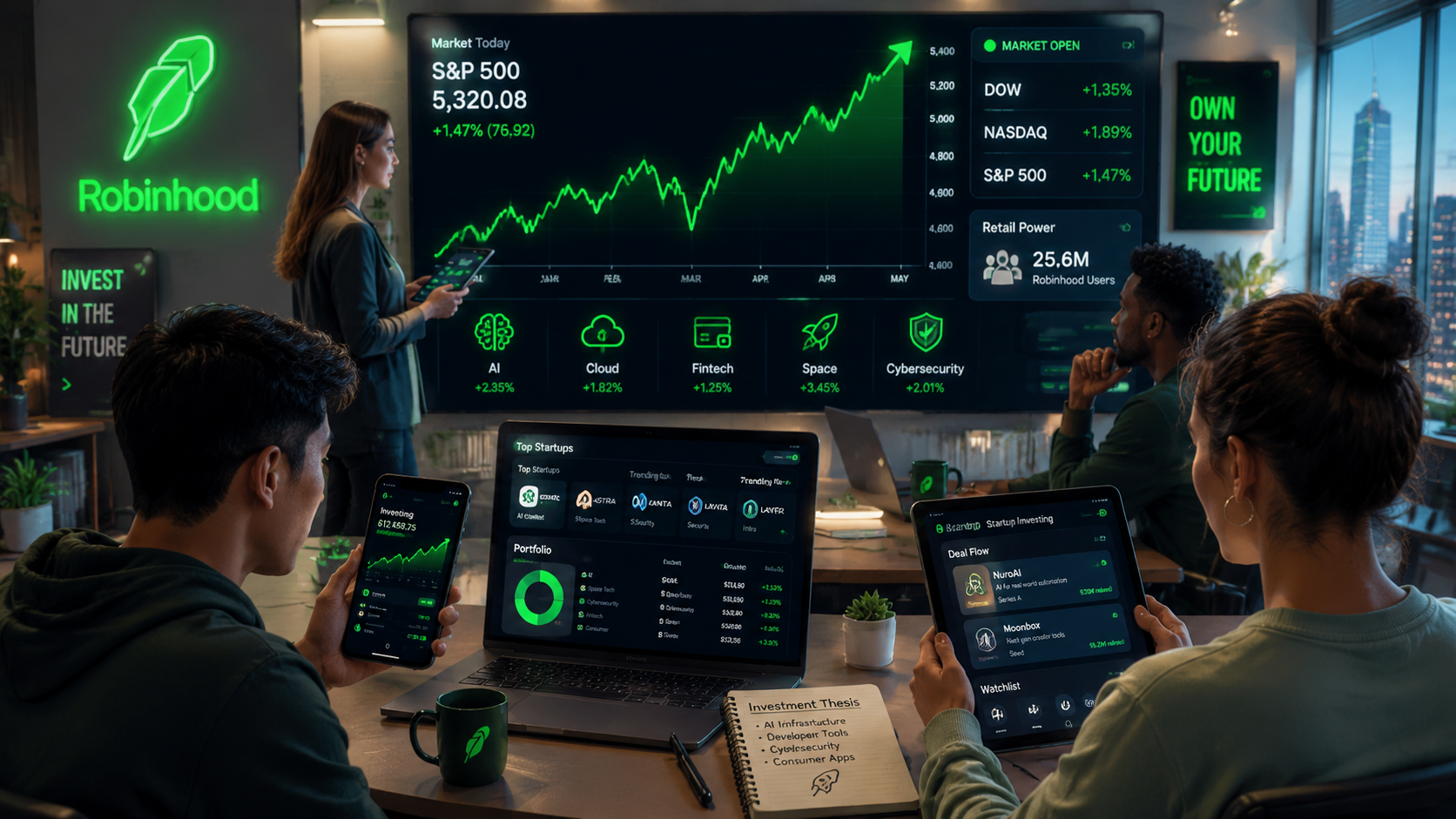
The Robinhood venture fund has unveiled plans for its second retail-focused IPO, signaling a strategic pivot towards capitalizing on the ongoing AI investment surge. This move highlights the firm’s commitment to democratizing access to high-growth venture opportunities, previously reserved for institutional investors, by leveraging Robinhood’s brokerage platform.
The confidential S-1 filing reveals that the Robinhood venture fund’s latest offering aims to attract retail investors eager to tap into early and growth-stage startups that are riding the wave of the AI rally. The fund’s approach reflects a broader trend in venture capital where retail participation is becoming increasingly feasible, aligning with Robinhood’s ethos of breaking down barriers within financial markets. This follows the successful performance of the fund’s first retail IPO, which set a precedent for accessibility and generated significant interest among individual investors.
AI startups have become the focal point for this fund, drawing from sectors such as natural language processing, computer vision, and autonomous systems. Industry experts, including those cited in recent analyses by Forbes, anticipate that AI technology will continue to revolutionize multiple industries in the coming years, underscoring the strategic importance of these investments. Investors investigating the specifics of the Robinhood venture fund will want detailed insights into targeted startups, many of which remain private but show promising growth trajectories fueled by AI innovation.
“What is Robinhood’s venture fund investing in?” is a common inquiry among retail investors. Current portfolio highlights include startups advancing AI in healthcare diagnostics and financial analytics, positioning the fund at the intersection of technology and practical application. The Robinhood venture fund also strategically balances risk through diversification across early-stage companies in growth phases, which traditionally promise higher returns albeit with increased volatility.
Navigating the regulatory landscape remains a considerable challenge for such funds aiming to facilitate retail access to private equity. Compliance with SEC regulations on securities offerings to non-accredited investors necessitates rigorous disclosures and transparency, reflected in Robinhood’s detailed S-1 documentation. This ensures investor protection while promoting inclusivity, a balance critical for maintaining trust and regulatory approval.
Retail investors showing interest must assess potential risks, including market volatility inherent in startup investments and the impact of evolving AI regulations globally. Compared to competitors like Forge Global and EquityZen, Robinhood’s venture fund leverages its brokerage integration to offer streamlined investment experiences, though each platform presents unique trade-offs in liquidity options and fee structures. This brokerage integration simplifies the investment process, making venture capital more accessible through familiar interfaces rather than complex private placement paperwork.
The Robinhood venture fund also addresses investor eligibility criteria with provisions accommodating a wide range of retail participants, an important differentiator from traditional venture capital vehicles that often require accredited status. Historical returns from the fund’s initial offerings, while promising, are subject to market conditions and the inherent unpredictability of startup success, necessitating due diligence and diversified portfolio strategies.
Looking ahead, Robinhood plans to expand its IPO pipeline, with several AI-focused startups poised for inclusion in future offerings. This aligns with market expectations fueled by the AI rally, as detailed in coverage on Yahoo Finance and other industry news outlets. As one industry analyst observes, “Retail investors now have an unprecedented opportunity to engage directly with cutting-edge AI innovation via platforms that merge venture capital with brokerage services.”
For retail investors seeking comprehensive guidance, resources such as the Robinhood venture fund retail investors guide offer valuable insights into fund mechanics and eligibility. Additionally, understanding the broader context of AI startup investment can be bolstered by exploring detailed analyses at AI startup investments. When considering participation in IPOs like this, the retail IPO guide provides essential information on market dynamics and procedural expectations.
As the AI rally continues to shape capital flows and technology investment strategies, Robinhood’s venture fund stands out by merging technological innovation with investor accessibility. This development not only challenges established venture capital norms but also empowers a new generation of retail investors to participate meaningfully in private market growth.
Investors should stay informed about ongoing regulatory updates and industry trends to maximize opportunities while managing risk. The emergence of such funds signals a paradigm shift in how venture capital is deployed and democratized, potentially redefining retail investment portfolios for years to come.