
Voice Recognition Technology Revolutionizes Future Offices
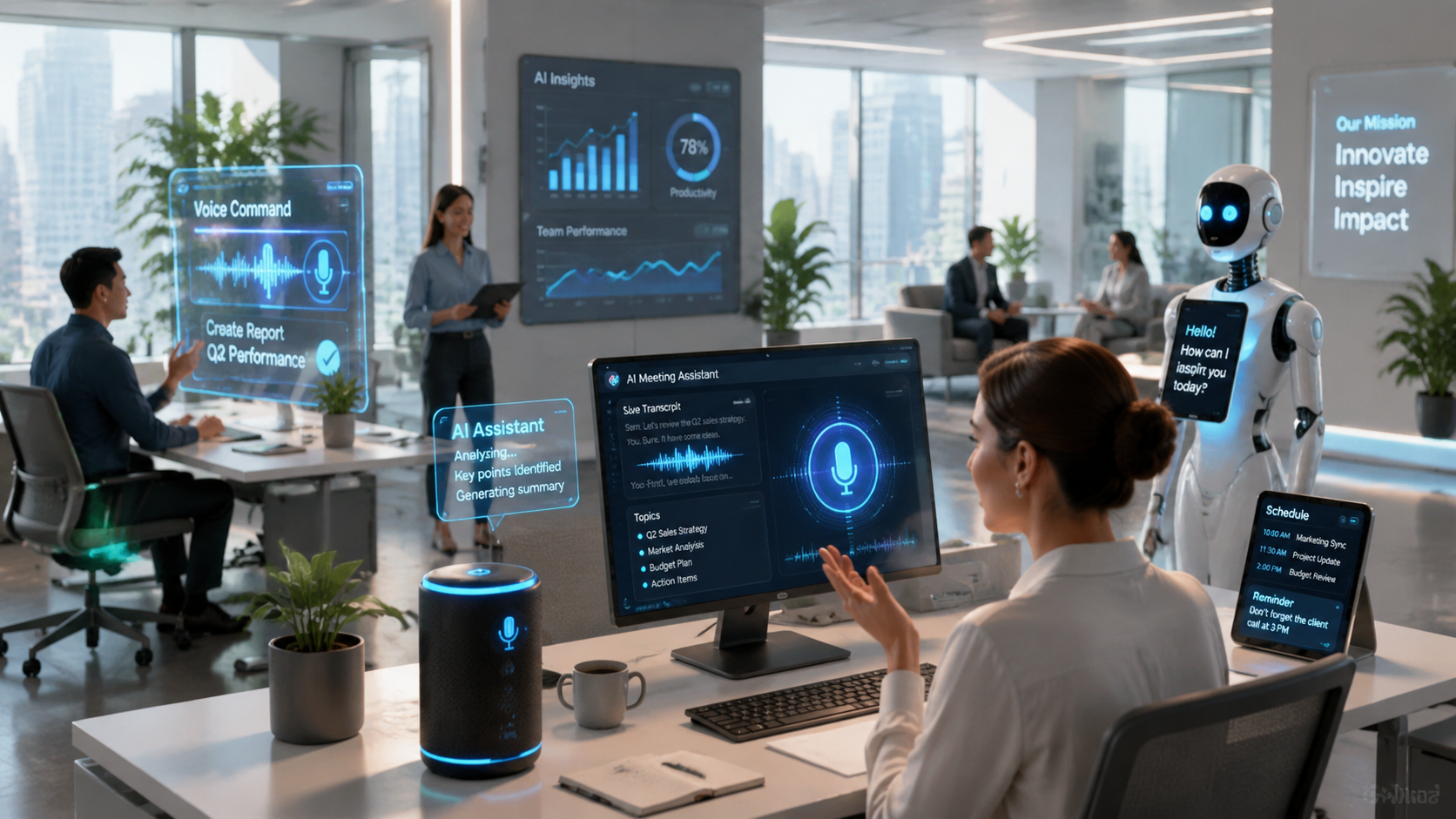
Voice recognition technology is rapidly transforming the landscape of future offices, promising a new era of smart, efficient, and seamless workplace interactions. As businesses increasingly adopt future office AI solutions, voice recognition stands out as a pivotal tool to enhance productivity and streamline operations.
Voice recognition technology allows computers and devices to interpret and execute commands given through spoken language. Unlike traditional input methods, it enables hands-free interaction, significantly reducing time spent on routine tasks. This shift is particularly impactful in office environments aiming to integrate smart office voice control systems for better workflow management.
The technology works by converting spoken words into text or commands using advanced algorithms and natural language processing (NLP). This interaction is facilitated through microphones and cloud-based servers, which continuously improve their accuracy through machine learning. According to industry reports, adoption rates for speech recognition in office applications have grown steadily, fueled by demand for automation and enhanced productivity tools.
In real-world applications, companies like Google have embedded voice recognition into their Workspace environments. This integration enables users to schedule meetings, draft emails, and interact with documents using voice commands, which dramatically reduces manual input errors and saves time. Google’s use case exemplifies how combining voice recognition with AI can create a smarter office ecosystem tailored for modern professional needs.
The benefits of implementing voice recognition technology in offices are multifaceted. It increases accessibility, allowing users with disabilities easier access to digital tools. Employees benefit from reduced multitasking stress and faster data entry. Additionally, voice commands can activate collaborative tools, search databases, and control smart devices in the office environment, further optimizing productivity. Such enhancements align with findings on voice-activated technology in the workplace, which underline its role in driving efficiency and innovation.
However, the adoption of voice recognition technology is not without challenges. Security concerns rank high among potential pitfalls as voice data can be sensitive and prone to interception or misuse. Enterprises must implement robust encryption and authentication protocols to safeguard voice interactions. There is also the technical challenge of ensuring accurate recognition across diverse accents and languages, which can affect user experience and system reliability.
Moreover, integrating voice recognition into existing office infrastructures requires overcoming compatibility issues with legacy systems and ensuring comprehensive employee training. The competitive landscape includes alternatives like Amazon’s Alexa for Business, which offers extensive smart office voice control capabilities but may differ in depth of integration and customization compared to other platforms.
Looking ahead, the future of voice recognition technology in offices is promising. Advancements in artificial intelligence and deep learning continue to enhance the contextual understanding and responsiveness of voice systems. Companies investing in future office AI see voice recognition as an integral component of digital transformation strategies aimed at creating intuitive, AI-augmented workspaces.
Increased adoption of voice technology correlates with significant productivity gains. Studies show businesses that employ smart office voice control report measurable improvements in task efficiency and employee satisfaction. As the technology matures, features such as real-time translation, emotion detection, and predictive commands are expected to become standard, offering more dynamic and personalized workplace interactions.
For those interested in the broader implications of AI on employment, including job creation driven by these innovations, resources like the analysis on NVIDIA CEO’s insights on AI job creation provide valuable context on how voice recognition contributes to new roles and industries.
In summary, voice recognition technology is at the forefront of defining how future offices will function. Its ability to streamline communication, automate tasks, and enhance user experience positions it as a critical element of office automation. As organizations navigate the challenges of integration and security, the benefits for productivity and inclusivity are poised to reshape workplace dynamics.
To stay informed on the latest developments in future office AI and smart office voice control innovations, professionals should consider signing up for AI updates and engaging with emerging case studies that illustrate practical, effective implementation.