
ChatGPT Images 2.0 Booms in India: Global Impact Soars
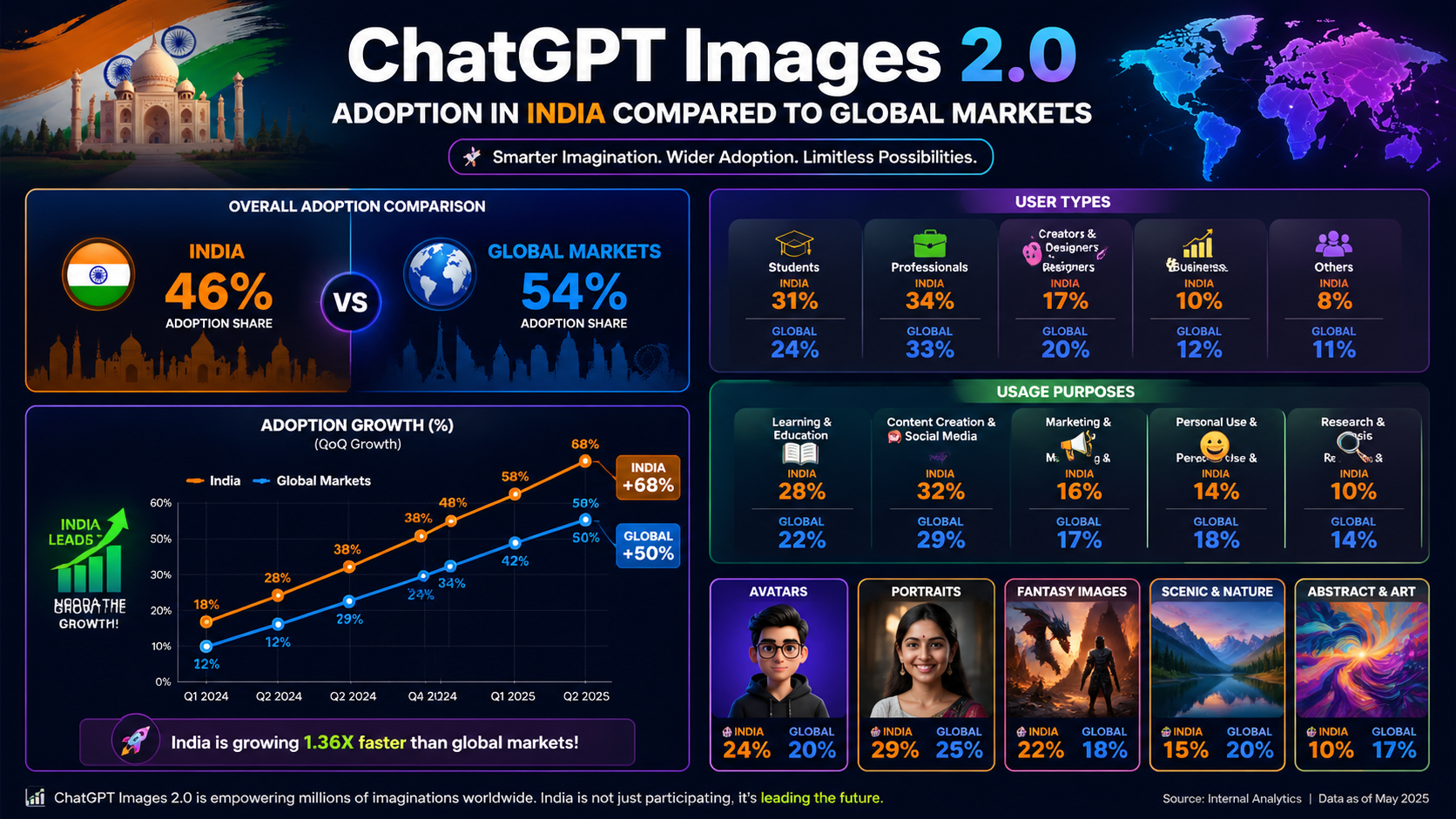
ChatGPT Images 2.0 has swiftly become a cultural and technological phenomenon in India, registering a remarkable surge in usage since its launch. OpenAI’s latest iteration of its image generation tool is seeing traction in a market that has rapidly embraced AI-driven creativity, contrasting sharply with its more subdued adoption across other global regions.
India’s affinity for ChatGPT Images 2.0 is evident from OpenAI’s internal analytics, indicating a 50% month-over-month user growth, one of the highest rates worldwide. This surge is underpinned by a combination of factors, including a digitally savvy population eager to explore AI-generated art and the increasing integration of image-based AI in local content creation and marketing. The tool’s blend of accessibility and powerful multimodal capabilities has particularly resonated in India’s vibrant startup and influencer ecosystems.
Such expansive adoption is not merely a cultural trend but reflects significant advancements in AI image technology. ChatGPT Images 2.0 integrates web-enabled multi-image generation, a step up from earlier single-image outputs, enabling users to create more detailed and contextually rich visuals. This facilitates complex image prompts, enhancing creativity and utility, especially for users crafting content for digital campaigns or media.
This growth in India contrasts with the platform’s pace in many Western markets, where adoption remains modest. As TechCrunch notes, while India leads in engagement metrics, other regions are awaiting broader awareness and feature maturation to fully embrace these AI tools. Factors such as privacy concerns, varied internet infrastructure, and differing cultural attitudes toward AI-generated content contribute to this discrepancy.
India’s market momentum also highlights its unique position in the AI image generation landscape. Local businesses and creators leverage ChatGPT’s images to innovate in areas from ad design to social media storytelling, often blending it with other AI tools for maximum impact. This has also amplified interest in related services such as DALL-E 3, another OpenAI image generation model gaining traction in India’s AI community.
The tool’s rise is part of a larger narrative on AI-powered vision technologies, where India is positioned as an early adopter. Analysts suggest that this rapid adoption could translate into significant economic and creative dividends for the country’s tech ecosystem, potentially influencing future AI development and user experience strategies globally. This is reinforced through evolving applications like ChatGPT’s vision capabilities and expanded image prompt functionalities found in the newer GPT-4o iterations.
However, adoption is not without challenges. Users and developers alike navigate issues like ethical considerations around AI-created images, copyright concerns, and the accuracy of generated content. These discussions are crucial, given the increasing use of such technology in commercial and creative sectors. Conversations around responsible AI usage are growing, especially in burgeoning markets like India with rapidly scaling AI engagement.
To better equip users, tutorials and guides on generating images with ChatGPT are emerging as necessary resources. They help bridge the gap between first-time users and more advanced functionalities, improving overall experience and utility. Such educational efforts align with broader strategies to democratize AI tools while addressing the complexities of prompt engineering and image customization.
Compared to competitors like Midjourney and Stable Diffusion, ChatGPT Images 2.0 offers a distinctive user-friendly interface combined with the extensive language processing strength of OpenAI’s GPT models. This integration allows seamless transitions between text and imagery, a key appeal for users in India’s dynamic digital content space eager to combine storytelling with visuals.
The global AI image market is projected to expand as companies invest heavily in similar technologies. OpenAI’s placement among TIME’s 100 Most Influential Companies underlines its pivotal role in shaping this future, with ChatGPT Images 2.0 exemplifying this influence through its innovative features and growing market impact. This recognition signals how AI vision tools are becoming central to technological advancement narratives worldwide.
For readers seeking to understand the broader AI tools ecosystem in India, the rise of ChatGPT Images 2.0 ties closely with India’s burgeoning AI startups and increasing venture capital interest, exemplified by stories such as the funding and valuation trajectory of California-based Parallel Web Systems supported by Sequoia AI. This reflects a healthy landscape where innovation, investment, and user demand intersect to accelerate AI adoption across the region.
As OpenAI continues refining ChatGPT Images 2.0, industry watchers predict expanding features that will enhance creative freedom and address current limitations. The platform’s iterative growth, supported by continuous user feedback from key markets like India, suggests a future where AI-driven image generation not only supplements human creativity but actively shapes global digital culture.
Amidst the evolving dynamics of AI image adoption, India’s leadership stands out, offering a real-world case study of how emerging markets can leapfrog traditional barriers to access cutting-edge technology. This phenomenon underscores the need for ongoing dialogue about AI ethics, user education, and competitive innovation within the global AI ecosystem.
Explore more about how startups are fueling AI growth in India through the detailed funding and valuation insights of California-based Parallel Web Systems, a company blending AI and web technologies, at Parallel Web Systems funding and valuation by Sequoia AI. For in-depth technical updates and user experiences around ChatGPT’s evolving image capabilities, OpenAI updates ChatGPT Images with web-enabled multi-image generation provides comprehensive coverage. Additionally, insights on ChatGPT Images 2.0’s regional success and its varying global footprint can be found in this analysis by TechCrunch on ChatGPT Images 2.0 in India.
More context about OpenAI’s impact in the AI landscape is also available in its profile among TIME’s 100 Most Influential Companies at TIME 100 Most Influential Companies OpenAI profile.
As the AI image generation field evolves, ChatGPT Images 2.0’s impressive uptake in India signals a broader shift towards integrating AI deeper into everyday creativity and commerce. This momentum may serve as a blueprint for other regions and industries looking to harness AI’s transformative potential responsibly and effectively.